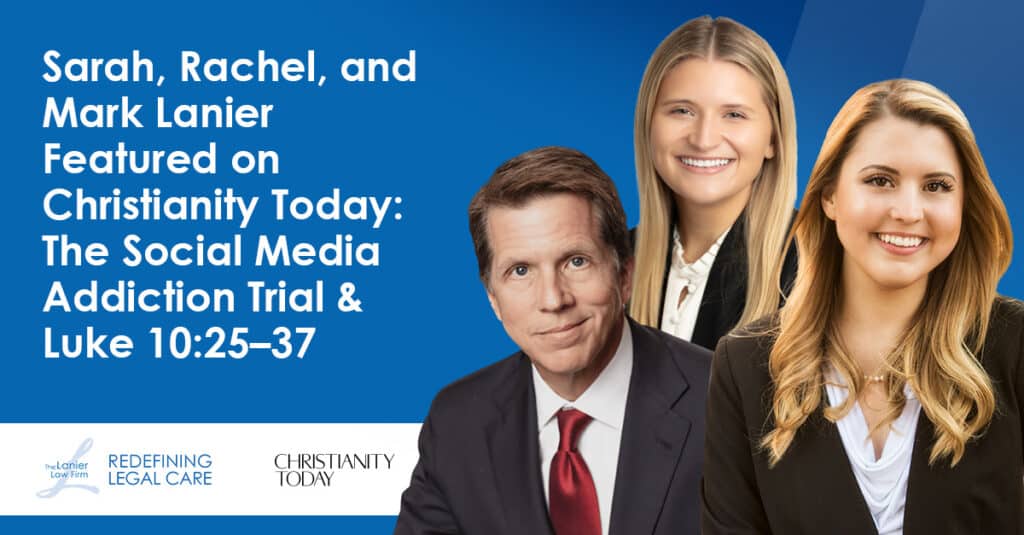
In a powerful discussion on the Christianity Today podcast, Sarah, Rachel, and Mark Lanier explore the intersection of faith, law, and technology through the lens of their landmark social media addiction trial. The case, which pitted The Lanier Law Firm team against Meta and YouTube, centers on the mental health damage caused by addictive social media features, particularly for children and teenagers.
Rachel Lanier provided essential context about the case, focusing on Kaley, a 20-year-old plaintiff, who represents thousands of young adults whose lives have been deeply impacted by social media. “These companies targeted kids like Kaley,” Rachel explained, detailing how Meta and Google’s platforms exploited children’s vulnerability, making their apps addictive and with parent controls that are ultimately ineffective. The lawsuit emphasizes the responsibility of these companies to protect users, especially children, from harmful mental health consequences tied to excessive use of their platforms.
Mark Lanier further elaborated on the case and the parable of the Good Samaritan from the Bible (Luke 10:25–37), emphasizing how, as a lawyer, his duty is not just to win cases, but to identify those who need help the most.
“In my road of life, while I’m walking from Jerusalem to Jericho figuratively, who do I come across that God has put in my path with needs that I can help address in the practice of law?”
— Mark Lanier.
The trial, he noted, felt like an opportunity to stand up for those who are often overlooked in the pursuit of profit.
The podcast also highlighted the disturbing findings in the internal documents of these companies. According to Mark, engineers at Meta and YouTube were not just seeking to increase viewership; they were deliberately aiming for addiction. Mark described how the platforms used sophisticated algorithms and addictive features like endless scrolls and notifications to trap users in a cycle of compulsive usage.
Sarah Lanier touched on the role of accessibility in this issue, comparing it to underage drinking. “So it would be the equivalent of her going to a serve yourself kind of bar where they don’t check your ID. You maybe aren’t placing an order, but you can get whatever you want.” Sarah said. Platforms like YouTube didn’t require users to enter their age, allowing minors to access content without parental controls. She emphasized that the design of these platforms was not only easily accessible but also intentionally addictive, making it even harder for children to escape once they were exposed.
Listen to the full podcast from Christianity Today here.
About The Lanier Law Firm
At The Lanier Law Firm, we are committed to holding companies accountable for the harm their products cause, particularly when those products target vulnerable populations, such as children. The fight for justice is ongoing, and many victims of social media addiction are still seeking the help they need. Our firm continues to advocate for those who have suffered at the hands of these platforms, working tirelessly to ensure they receive the compensation and support they deserve.
If your child has been affected by social media addiction, we are here to help. Our dedicated legal team is ready to guide you through your options and fight for justice on your behalf. Contact The Lanier Law Firm today.