Camp Lejeune Water Contamination
For more than three decades, thousands of people who worked, lived, and served the country at Camp Lejeune were exposed to toxic water contaminated with deadly volatile organic compounds. Nearly 70 years after the contamination began, the Camp Lejeune Justice Act passed, availing long-awaited justice for Camp Lejeune water contamination victims.












Home » Toxic Torts Attorneys and Environmental Contamination Litigation » Camp Lejeune Water Contamination
- Content Reviewed by:
- Michelle Greene
- Page Last Updated:
- November 25, 2025
Navigate This Page
- About Camp Lejeune
- What Were the Contaminants in Camp Lejeune Water?
- Which Areas of Camp Lejeune Were Affected by Contaminated Water?
- How Did the Water at Camp Lejeune Become Contaminated?
- When Was the Water at Camp Lejeune Contaminated?
- Is Camp Lejeune Water Still Contaminated?
- When Was the Water Contamination at Camp Lejeune Discovered?
- The Camp Lejeune Justice Act: VA Benefits for Victims
- Timeline of Camp Lejeune Water Contamination
- What Should I Do if I Have Been Affected by Contaminated Camp Lejeune Water?
The Agency for Toxic Substances and Disease Registry estimates that as many as one million people, including military personnel, their family members, and civilian staff members, were exposed to contaminated water at Camp Lejeune through drinking, bathing, and cooking.
Exposed individuals have faced devastating effects such as miscarriages, the death of children, deadly cancers, and permanent organ damage. The United States military delayed action after it became aware of the contamination, then hid behind an obscure law to evade responsibility.
Victims were left with no means of obtaining justice or paying for their overwhelming medical needs.
About Camp Lejeune
Camp Lejeune was named in honor of Lieutenant General John A. Lejeune, a highly decorated Marine officer who served on multiple expeditionary missions for more than 40 years. He is often referred to as “the greatest of all Leathernecks.”
In recognition of Lieutenant Lejeune’s accomplishments, Camp Lejeune’s nickname is “Home of the Expeditionary Forces in Readiness.” Unfortunately, the legacy and namesake of Lieutenant Lejeune will forever be associated with the scandal of tainted water.
Where Is Camp Lejeune?
Camp Lejeune is located in Onslow County near Jacksonville in southeastern North Carolina. It occupies 153,439 acres, including 14 miles of Atlantic beachfront. The main entrance is located on Highway 24. The site is adjacent to the New River.
What Is Camp Lejeune?
Camp Lejeune is the largest United States Marine base in the world, which provides support and training for the U.S. Marine Corps, one major Navy command, and a Coast Guard command.
Construction of Camp Lejeune began in 1941. The site was chosen due to its strategic location and diverse terrain, which includes dense forests and sandy beaches.
Camp Lejeune provides housing for active and retired military personnel, their families, and civilian employees. Nearly every facility the population may need is available on base, including schools, hospitals, banks, and recreational facilities.
Camp Lejeune has a capacity of approximately 137,526 people. The current population includes the following:
- 38,778 active-duty military personnel
- 38,769 family members
- 3,349 civilians
- 18,719 retirees and family members
What Were the Contaminants in Camp Lejeune Water?
The water at Camp Lejeune was heavily contaminated with volatile organic compounds. The Environmental Protection Agency (EPA) defines volatile organic compounds as compounds with “high vapor pressure and low water solubility.” They are man-made chemicals, such as the following:
- Chemicals used in the manufacture of paints, pharmaceuticals, and refrigerants
- Industrial solvents
- Fuel oxygenates
- By-products of chlorination in water treatment
- Components of petroleum fuels, hydraulic fluids, paint thinners, and dry cleaning agents
Volatile organic compounds may be emitted as gases or leach into the water supply, as occurred at Camp Lejeune. Each volatile organic compound found in Camp Lejeune water has been identified as a causative factor in numerous adverse health effects.
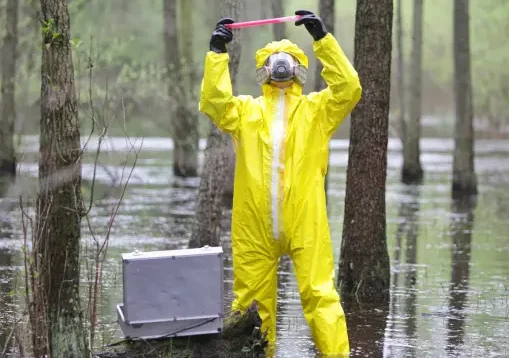
Many of these compounds were not regulated during the time the water was contaminated, but EPA has since established maximum contaminant levels far below the corresponding levels found in Camp Lejeune water.
Trichloroethylene and Perchloroethylene
Trichloroethylene, also known as TCE, is a colorless liquid chemical used to make refrigerants and as a degreasing solvent for metal equipment, according to the National Cancer Institute.
TCE is also used as a spot remover by commercial dry cleaners and may be found in household products, such as aerosol cleaning products and paint removers.
Perchloroethylene, also known as tetrachloroethylene or PCE, is described by the CDC as a colorless liquid with a mild chloroform odor. It is used as a solvent in dry cleaning and a degreaser for metal industrial equipment.
The EPA maximum contaminant levels for PCE and TCE are five parts per billion.
Health Effects of Trichloroethylene and Perchloroethylene
The Agency for Toxic Substances and Disease Registry has confirmed links between TCE and/or PCE and multiple health conditions including:
Cancer
- Kidney cancer
- Non-Hodgkin lymphoma
- Leukemia
- Liver cancer
- Multiple myeloma
- Bladder cancer
- Breast cancer
- Cervical cancer
- Esophageal cancer
- Lung cancer
- Hodgkin’s disease
- Ovarian cancer
- Prostate cancer
- Rectal cancer
Male breast cancer is rare, and the causes are unknown. However, the ATSDR found a causal link between male breast cancer and exposure to TCE and PCE at Camp Lejeune.
Pregnancy Complications and Birth Defects
- Low birth weight
- Fetal death
- Major malformations
- Miscarriage
- Neural tube defects
- Oral cleft defects
Organ, Tissue, and Body Systems Damage
- Cardiac defects
- End-stage renal (kidney) disease
- Eye defects
- Impaired immune system function
Neurological Diseases and Effects
- Parkinson’s disease
- Scleroderma
- Neurological effects
- Skin sensitivity disorders
- Delayed reaction times
- Problems with short-term memory
- Visual perception issues
- Attention deficits
- Color vision impairment
- Delayed recall
- Visual perception deficits
- Decreased blink reflexes
- Mood effects, including confusion, depression, and tension
- Severe, generalized skin hypersensitivity disorder
Benzene
The American Cancer Society defines benzene as a colorless, flammable liquid with a sweet odor that evaporates quickly when exposed to air. It is formed from natural processes, but exposures to benzene typically come from human activities.
Benzene is primarily used as a starter material for manufacturing other chemicals. It has historically been used as an industrial solvent and gasoline additive. It is a natural by-product of cigarette smoke, crude oil, and gasoline.
The EPA’s established maximum contaminant level for benzene is 5 parts per billion.
Health Effects of Benzene
Benzene has been associated with the following health conditions, according to the ATSDR:
- Leukemias
- Non-Hodgkin lymphoma
- Multiple myeloma
- Aplastic anemia
- Myelodysplastic syndromes
- Miscarriage
Vinyl Chloride
Vinyl chloride is a flammable colorless gas produced industrially for commercial uses, according to the National Cancer Institute. It is used to make polyvinyl chloride, better known as PVC. It is also a combustion product in cigarette smoke.
The maximum contaminant level for vinyl chloride is 2 parts per billion.
Health Effects of Vinyl Chloride
The ATSDR has found links between vinyl chloride and the following health conditions:
- Liver cancer
- Brain cancer
- Lung cancer
- Soft tissue cancer
- Liver cirrhosis
- Male breast cancer
Trans-1,2-Dichloroethylene
Trans-1,2-dichloroethylene, also known as DCE, is an industrial product used in the manufacture of solvents and chemical mixtures. It can enter the water supply through landfills, hazardous waste sites, and chemical spills.
This product can evaporate into the air and be inhaled when contaminated water is hot, such as during bathing or cooking.
Health Effects of Trans-1,2-Dichloroethylene
The long-term health effects of DCE are not known. In animal studies, low doses received by mouth impacted the blood and liver. The ATSDR did find a link between DCE exposure at Camp Lejeune and male breast cancer.
Call 800-723-3216 now to see if our personal injury law firm can pursue compensation for you and your family. Consultations are free.
Which Areas of Camp Lejeune Were Affected by Contaminated Water?
The contaminated water at Camp Lejeune served the following areas:
- Hadnot Point
- Tarawa Terrace
- Holcomb Boulevard
Each of these areas was affected differently by the contamination due to varying sources of toxins.
Hadnot Point
The Hadnot Point water contamination impacted the largest number of people because it provided water to most of the barracks, workplaces, and restaurants. It also provided water to some of the family housing and even a hospital located on the base. Specific areas served include the following:
- Mainside barracks
- Hospital Point family housing
- Family housing in Midway Park, Paradise Point, and Berkeley Manor (until June 1972)
Hadnot Point is also one of Camp Lejeune’s oldest water supply sources, with the water plant’s establishment in 1942. Water samples from Hadnot Point wells were taken from May 1982 through 1985. The samples were found to contain alarming concentrations of the following contaminants:
- Trichloroethylene – 1,400 ppb
- Perchloroethylene – 100 ppb
Vinyl chloride, DCE, and benzene were also discovered during sampling.
The ATSDR estimates that at least one of these contaminants exceeded the current EPA maximum contaminant level from August 1953 through January 1985. The most severely contaminated wells were shut down in February 1985, three years after the military discovered the contamination in 1982.
Tarawa Terrace
The Tarawa Terrace water treatment plant was established in 1952 and served Tarawa Terrace family housing and the Knox trailer park. Perchloroethylene was the primary volatile organic compound found in the Tarawa treatment plant, in the amount of 215 parts per billion—43 times higher than the EPA safe limit.
The ATSDR estimates that the levels of PCE in Tarawa Terrace drinking water exceeded 5 parts per billion for approximately 346 months from November 1957 through February 1987. The most contaminated wells were shut down in February 1985, and the entire plant was shut down in March 1987.
Holcomb Boulevard
The Holcomb Boulevard water treatment plant served the following areas:
- Family housing in Midway Park, Paradise Point, and Berkeley Manor after 1972
- Tarawa Terrace family housing after March 1987
The water treatment plant was established in 1972. Before this, these areas were served by the Hadnot Point water treatment plant. The Holcomb Boulevard wells were generally uncontaminated, but contaminated water was occasionally supplied to the Holcomb Boulevard water system after 1972 as follows:
- From January 27 through February 7, 1985, while the Holcomb Boulevard plant was shut down
- During dry spring and summer months intermittently when demand was high from 1972 through 1985
How Did the Water at Camp Lejeune Become Contaminated?
The water at Hadnot Point and Tarawa Terrace became contaminated through separate sources.
Off-Site Water Contamination Source
The primary source of contamination of the Tarawa Terrace water wells was the improper disposal of perchloroethylene by a nearby off-site dry cleaning company, ABC One-Hour Dry Cleaners. The dry cleaning company has since gone out of business.
On-Base Water Contamination Sources
The water at Hadnot Point became contaminated through improper on-base operations handled by the military.
Leaking Fuel Storage Tanks
The military developed the Hadnot Point Fuel Farm in 1941 with 14 large underground storage tanks and one 600,000-gallon above-ground storage tank. This location is now known as the Hadnot Point Industrial Area and is located within 1,200 feet of the nearest Hadnot Point drinking water well.
It is not known when the fuel tanks began leaking, but the first documented leak was discovered in 1979 when the tanks had lost 20,000 to 30,000 gallons of fuel. The fuel farm was not replaced until 1990.
In March of 2009, the ATSDR stumbled upon previously undisclosed documentation showing the military had leaked 1.1 million gallons of fuel.
Hazardous Waste Disposal Sites
Camp Lejeune was also the site of industrial dumps that were located in alarming proximity to water treatment plants, including the base junkyard, which was situated within 300 feet of a Hadnot Point well.
Hazardous waste disposal sites that contributed to water contamination in the Hadnot Point water wells include the following, according to the Government Accountability Office:
- Open-field storage lots for cleaning solvents, batteries, and waste oils
- Piney Green Road, a site where hazardous materials were handled and stored
- The transformer storage lot, where pesticides and oil were handled
- A firefighting training pit, where toxic chemicals were used
- An industrial fly ash dump
- A large industrial area where fuel leaks and spills occurred
Get a Free Legal Consultation
- Passionate legal advocates with decades of trial experience
- Over $20 billion recovered for our clients
- No upfront costs or fees
When Was the Water at Camp Lejeune Contaminated?
The dates of documented contamination are from August 1953 through December 1987. The 1953 date corresponds with the opening of the off-site dry cleaning company. The Hadnot Point fuel farm was established in 1941, so water contamination may have occurred earlier than 1953.
Is Camp Lejeune Water Still Contaminated?
The last contaminated wells were shut down in 1987, and the water at Camp Lejeune has undergone regular testing since that time. Camp Lejeune was placed on the EPA’s National Priorities List in 1989, making it a Superfund site.
Since then, the EPA, U.S. Navy, and North Carolina Department of Environmental Quality have taken incremental steps to clean up the contamination and monitor the soil and groundwater. The following cleanup tasks have been completed:
- Removal of contaminated soil, drums, storage tanks, batteries, waste liquids, and dense nonaqueous phase liquids
- The installation of groundwater and soil treatment systems
- Removal of an estimated 24 tons of volatile organic compounds from the soil
- The implementation of continuous monitoring and institutional controls
- The application of oxidants to break down contaminants
Activities in areas that pose a risk to human health have been restricted. Multiple studies, ongoing cleanup efforts, and continued oversight by the EPA will remain in progress for the foreseeable future. The progress of cleanup efforts will be reviewed every five years, with the next five-year review scheduled for 2025.
When Was the Water Contamination at Camp Lejeune Discovered?
In 1974, the commanding general of Camp Lejeune issued Base Order 5100.13B, declaring organic solvents hazardous and that improper disposal could lead to water contamination. This indicates the U.S. Navy knew or should have known about the contamination at least as early as 1974.
However, no evidence suggests the order was heeded. The first documented well testing was completed in 1982. Shockingly, the military did not complete the removal of contaminated wells from service until five years later, in 1987.
Even after the wells were removed from service, the military failed to notify former military members of potential exposure. When the public finally learned about the water contamination in 1997, a decade after the last well closed, it was through a news report by Dan Rather, not through military notification.
The Camp Lejeune Justice Act: VA Benefits for Victims
The passage of the Camp Lejeune Families Act of 2012 provides free medical care to veterans and their families. The law also provides disability benefits to veterans affected by Camp Lejeune water contamination through the Department of Veterans Affairs.
However, the VA denies a high proportion of Camp Lejeune claims. This underscores the importance of the Camp Lejeune Justice Act’s role in ensuring Camp Lejeune water victims receive their well-deserved compensation.
Timeline of Camp Lejeune Water Contamination
By the time most affected individuals became aware that their serious illnesses and the deaths of their loved ones were caused by contaminated water at Camp Lejeune, the North Carolina statute of repose had already expired.
This law required that lawsuits regarding toxic substances be brought no later than ten years from the last exposure, regardless of when the victim learned of the exposure. This amounted to a denial of justice to approximately a million victims of Camp Lejeune contaminated water.
After a long, hard-fought battle by the advocacy groups mostly led by Camp Lejeune victims, the Honoring Our PACT Act of 2022 was passed. Contained within this act is the Camp Lejeune Justice Act.
The Camp Lejeune Justice Act is a federal law that sets aside the North Carolina statute of repose to allow Camp Lejeune lawsuits to be filed in federal court. The legislation also allows family members of deceased Camp Lejeune water contamination victims to file wrongful death lawsuits.
Under the act, claimants can seek unlimited economic and non-economic damages. Before you file with the court, you must file a claim through the Office of the Judge Advocate General (JAG) of the Navy’s Tort Claims Unit in Norfolk, Virginia.
When filing a claim, you will be required to state the amount of compensation you seek. The JAG may approve, counter, or deny your claim. If your claim is denied or the offer is lower than expected, you may file your Camp Lejeune lawsuit.
- 1941 – Camp Lejeune is constructed.
- 1941 – The Hadnot Point fuel farm is built.
- 1942 – The Hadnot Point water treatment plant is established.
- 1952 – The Tarawa Terrace water treatment plant is established.
- 1953 – ABC One-Hour Dry Cleaners opens for business and begins improperly disposing of the dry cleaning chemical PCE.
- 1953 – The year generally accepted as when water contamination at Camp Lejeune begins.
- 1972 – The Holcomb Boulevard water treatment plant is established.
- 1974 – Base Order 5100.13B is issued, declaring solvents as hazardous and stating that improper disposal could contaminate the water.
- 1979 – An underground storage tank fuel leak is discovered at the Hadnot Point Fuel Farm near the water treatment plant with a fuel loss of 20,000 to 30,000 gallons.
- 1982 – The first documented water contaminant testing is conducted, revealing the presence of toxic volatile organic compounds.
- 1985 – The most toxic wells are shut down.
- 1987 – The last of the contaminated wells are removed from service.
- 1990 – The Hadnot Fuel Farm is replaced.
- 1997 – The public, including former Camp Lejeune personnel, is made aware of the Camp Lejeune water contamination for the first time.
- 2009 – The ATSDR uncovers a previously concealed military record showing the Hadnot Fuel Farm’s actual fuel loss was 1.1 million gallons.
- 2012 – The Camp Lejeune Families Act of 2012 is passed, providing VA benefits to Camp Lejeune water contamination victims.
- 2022 – The Camp Lejeune Justice Act is passed.

Michelle Greene is dedicated to pharmaceutical and product liability, with a focus on toxic torts. She represented clients in AFFF and PFAS contamination cases. Recognized by Best Lawyers as “Ones to Watch” (2024-2025) and listed in Lawdragon’s Next Generation (2025) for Plaintiff Litigation.
What Should I Do if I Have Been Affected by Contaminated Camp Lejeune Water?
If you or your loved one has suffered severe adverse health effects as a result of Camp Lejeune water contamination, you may be entitled to substantial compensation through a Camp Lejeune water lawsuit.
Filing a federal claim is a complex procedure, and the Camp Lejeune Justice Act limits the amount of time you have to file a lawsuit. The Lanier Law Firm can ensure your claim is filed correctly and on time. We specialize in maximizing compensation for our clients. Contact us today to schedule a free consultation.