
Depo-Provera Side Effects and Meningioma Risk
Depo-Provera is associated with a wide range of side effects, but recent medical research has highlighted a much more severe concern. New studies link the medication to an increased risk of developing meningiomas, a type of brain tumor.
Home » Pharmaceutical Liability Litigation » Depo-Provera Lawsuit » Depo-Provera Side Effects and Meningioma Risk
- Legally Reviewed By:
- David L. Rosenband
- Page Last Updated:
- July 17, 2026
What Is Depo-Provera?
Depo-Provera, the brand name for medroxyprogesterone acetate, is an injectable contraceptive used roughly every three months. Depo-Provera is also commonly used to treat hormonal and menstrual conditions.
Roughly one in four women surveyed by the National Center for Health Statistics between 2015 and 2019 said they had used Depo-Provera before, according to a 2023 study. The data included interviews with more than 10,000 women who said they had experienced sexual intercourse with a man at least once.

What Are Some Common and Uncommon Side Effects Of Depo-Provera?
Depo-Provera has many known side effects, but some are rarer or more serious than others.
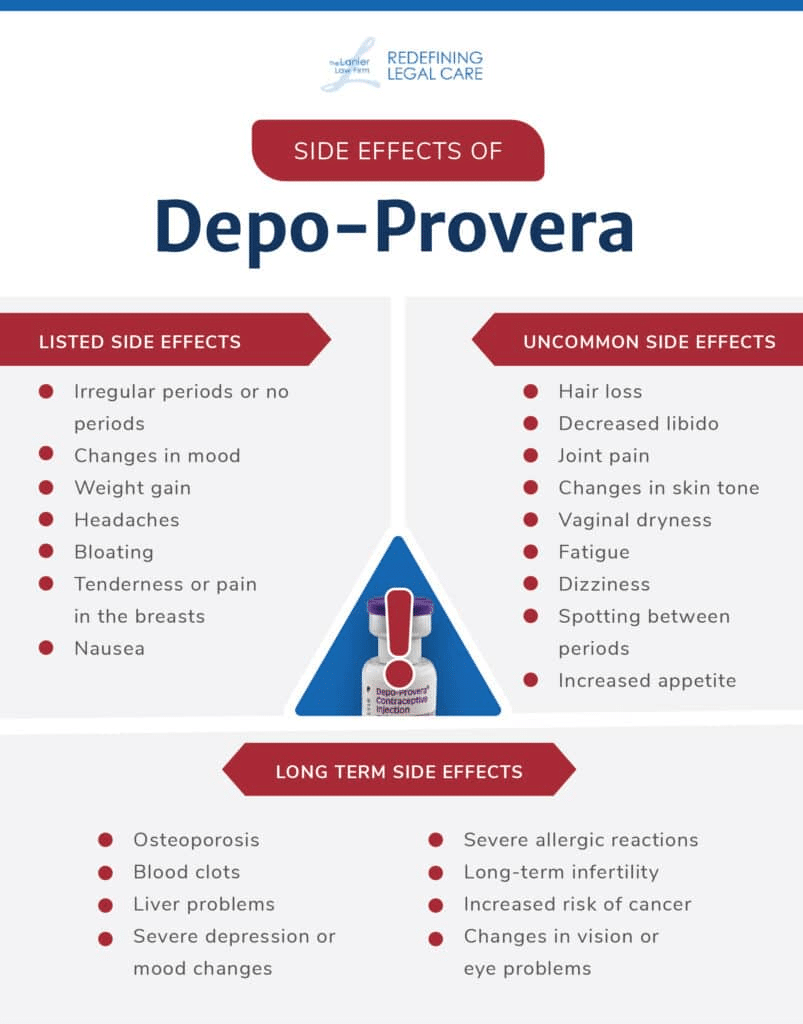
Depo-Provera Common Side Effects
Common side effects of Depo-Provera use include the following:
- Irregular periods or no periods
- Changes in mood, including irritability, anxiety, and depression
- Weight gain or increased appetite
- Headaches and migraines
- Bloating
- Tenderness, pain, or discomfort in the breasts
- Nausea
Depo-Provera Uncommon Side Effects
Some rarer side effects include the following:
- Hair loss or growth
- Decreased libido
- Joint pain
- Changes in skin tone, rashes, or acne
- Vaginal dryness
- Fatigue or dizziness
- Spotting between periods
Serious Depo-Provera Side Effects in Long-Term Users
Long-term Depo-Provera use has been linked to more significant symptoms, particularly when the drug is used for more than two years. These can include the following:
- Osteoporosis, or loss of bone density
- Blood clots
- Severe or crippling depression
- Vision issues
- Liver problems
- Severe allergic reactions
- Long-term infertility
- Increased risk of cancer
It is now becoming apparent that a heightened risk of developing meningiomas is among Depo-Provera’s serious long-term side effects.
What Is The Tumor Risk of Depo-Provera?
In March 2024, the British Medical Journal published a French study linking prolonged use of Depo-Provera to the development of meningiomas, or typically benign brain tumors. The study, which looked at more than 18,000 women who had surgery to remove meningiomas, found that patients who used Depo-Provera for more than a year were more than five times as likely to have developed them.
While meningiomas are usually not cancerous, they can cause disruptive symptoms, grow to become life-threatening, and may require risky or invasive surgery to remove.
Pfizer has acknowledged the BMJ study and claimed it would update its product labels and patient information in response, but as of November 20, the pharmaceutical giant’s online guide does not currently include any information about the risks of developing brain tumors. However, Pfizer’s product information document for Canada does mention the risk of meningiomas.
Other studies have identified a link between meningiomas and similar substances to Depo-Provera in 2022 and to Depo-Provera specifically in 2023.
Pfizer is simply not doing enough to warn patients about the risks of Depo-Provera. If you or a loved one was diagnosed with a meningioma after long-term use of Depo-Provera, you might be able to file a lawsuit. Contact The Lanier Law Firm today to discuss your case with our nationally-recognized attorneys.
Has Pfizer Issued Any Recalls For Depo-Provera?
Depo-Provera has a known history of causing osteoporosis over a long period of use. Pfizer previously issued a “black box” warning label notifying patients of the risk of bone density loss but has not recalled Depo-Provera over the risk of brain tumors.
Yet, several Depo-Provera lawsuits have been filed on behalf of individuals who developed brain tumors after long-term use. If you or a loved one has been diagnosed with a meningioma following long-term use of this contraceptive, contact us today for a free consultation.

David L. Rosenband is dedicated to pharmaceutical liability, personal injury, and product liability. He served as Liaison Counsel in the New York Bextra/Celebrex litigation and helped secure a $9 million verdict in the NJ Accutane case. Recognized for his work in MDLs and state court litigations.